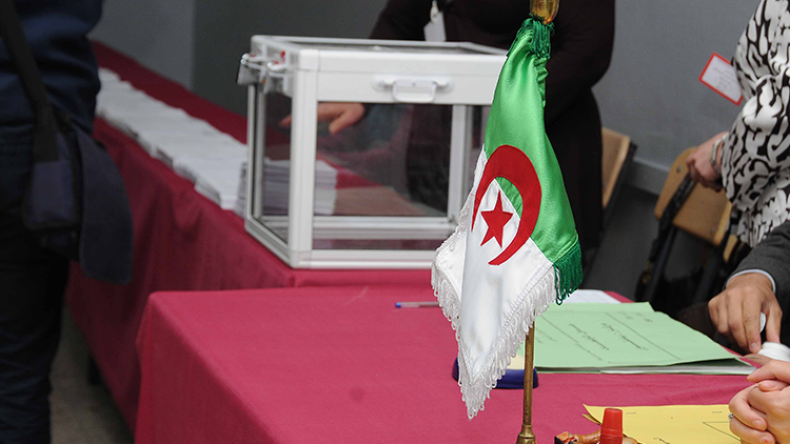
Algeria's upcoming legislative elections are scheduled for July 2, 2026. The announcement comes as the National Independent Elections Authority (ANIE) has started releasing data regarding candidate submissions, detailing the initial phases of the electoral process. A notable absence of several prominent party leaders from the initial submission lists has been observed, leading to questions about their participation or strategic decisions ahead of the polls. The elections will determine the composition of the People's National Assembly, the lower house of the Algerian Parliament, playing a key role in the nation's legislative framework. The process of candidate declaration and submission is a critical initial stage, setting the stage for the broader electoral competition.
Party Leaders Opt Out
Many party leaders are notably absent from the front lines of candidacies for the upcoming legislative elections. This observation has prompted discussions regarding their strategic decisions or personal circumstances ahead of the polls, marking a significant trend in the current electoral cycle. The decision by these prominent figures not to directly seek parliamentary seats through the initial submission phase has drawn attention.
The National Democratic Rally (RND) stands as an exception among political parties, with its Secretary-General, Mondher Bounen, heading the electoral list for Mila province. His direct participation contrasts with the approach taken by several other prominent party figures, making the RND's strategy distinct in this election. This move by Mr. Bounen signals a direct engagement with the electoral process at the constituency level, unlike many of his counterparts.
Sources indicate that some party leaders opted to withdraw from the parliamentary race due to a range of personal or political considerations. These decisions reflect individual assessments of the electoral landscape or internal party strategies, which may prioritize other forms of political engagement or leadership roles. The reasons behind these withdrawals are varied, encompassing a spectrum of personal commitments and strategic political calculations within their respective parties. Additionally, legal restrictions, including incompatibility rules, have prevented certain leaders from running in the elections. Such regulations typically bar individuals holding specific public offices or positions from simultaneously seeking parliamentary seats, influencing the composition of candidate lists and requiring some leaders to choose between their current roles and a parliamentary bid. These legal frameworks are designed to prevent conflicts of interest and ensure a clear separation of powers, impacting who can ultimately appear on the ballot.
ANIE Preliminary Submission Statistics
The National Independent Elections Authority (ANIE) announced the preliminary results of the collective candidacy declaration submissions for the upcoming elections, providing a full overview of the initial phase. These statistics offer insight into the level of participation from various political entities and independent hopefuls. For domestic constituencies, ANIE reported that 1484 candidate files were initially withdrawn across 69 wilayas, indicating a broad interest in contesting seats across the country's administrative divisions. This initial withdrawal phase allows prospective candidates to begin the process of gathering necessary documentation and signatures. Of these domestic files, 1208 were designated for lists sponsored by 36 political parties, showcasing the active involvement of established political organizations in the electoral contest. These parties are mobilizing their bases and presenting their platforms to the electorate. One coalition list was also submitted for domestic constituencies, indicating a collaborative effort among some political groups to pool resources and support for the elections. Additionally, 275 domestic files were submitted by independent lists, reflecting a significant number of non-affiliated candidates seeking to represent their communities without party backing. The presence of independent lists notes a desire for alternative representation outside traditional party structures. ANIE further disclosed that a total of 1,879,248 individual signature forms were withdrawn for domestic constituencies by prospective candidates, showing the extensive groundwork required for candidacy and the widespread engagement of citizens in supporting potential candidates.
For international constituencies, representing Algerians living abroad, 91 collective candidacy declaration files were withdrawn across 8 geographical regions. This demonstrates the commitment to ensuring representation for the Algerian diaspora in the People's National Assembly. Within this category, 80 files were sponsored by 22 political parties, demonstrating their intent to contest seats representing Algerians abroad and extend their political reach beyond national borders. The active participation of these parties in international constituencies reflects the importance placed on the diaspora's role in national politics. Two coalition lists were submitted for international constituencies, indicating a limited but present level of cross-party collaboration overseas, similar to the domestic efforts but on a smaller scale. Nine international files were submitted by independent lists, providing options for voters abroad who prefer non-party-affiliated representatives. The data also showed that a total of 2,102 individual signature forms were withdrawn for international constituencies, illustrating the procedural requirements for candidates representing Algerians overseas. For domestic constituencies specifically, after the initial withdrawal phase, 786 collective candidacy declaration files were formally submitted to ANIE, providing a clearer picture of the final candidate pool that has met all the necessary criteria for consideration.
Domestic and International Candidacies Detailed
Of the 786 collective candidacy declaration files formally submitted to the National Independent Elections Authority (ANIE) for domestic constituencies, a significant majority, 647, were sponsored by 32 political parties. These submissions represent the culmination of efforts by numerous political organizations to present their candidates to the electorate across various wilayas. The active participation of 32 political parties shows the multi-party nature of Algeria's political landscape. One submitted domestic file represented a coalition of more than one political party, noting instances where political groups chose to unite under a common banner to enhance their electoral prospects. Such coalitions can be strategic moves to broaden appeal and consolidate support. Additionally, 138 submitted domestic files were for independent lists, further emphasizing the role of non-party affiliated candidates in the electoral process. These independent candidates offer voters an alternative to established party politics. Bringing all these submissions together, a total of 10,144 candidates are running in domestic constituencies, reflecting a strong and competitive field for the People's National Assembly seats.
For international constituencies, ANIE reported 66 submitted collective candidacy declaration files, indicating the final number of compliant submissions for Algerians living abroad. Among these, 59 were sponsored by 15 political parties, showcasing the efforts of these parties to engage and represent the diaspora. The involvement of 15 political parties in international constituencies demonstrates the importance placed on this segment of the electorate. One submitted international file was under a coalition of more than one political party, illustrating a collaborative approach among some political groups to represent overseas Algerians. The remaining six submitted international files were for independent lists, providing a non-aligned option for voters in the international geographical regions. These figures collectively outline the breadth and depth of participation in both domestic and international electoral spheres for the upcoming legislative elections.