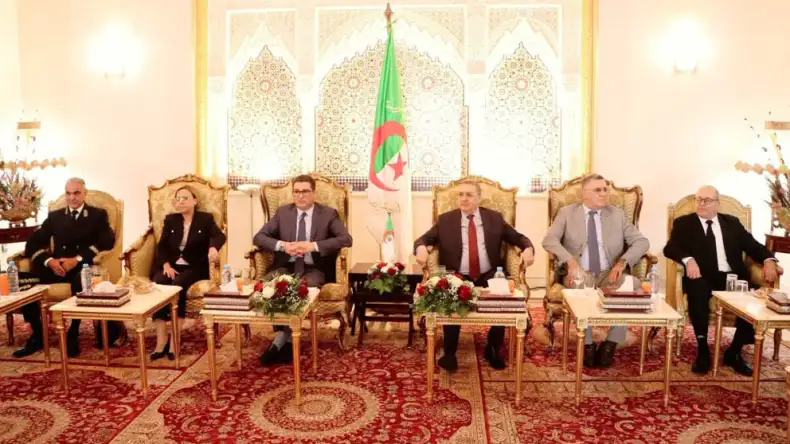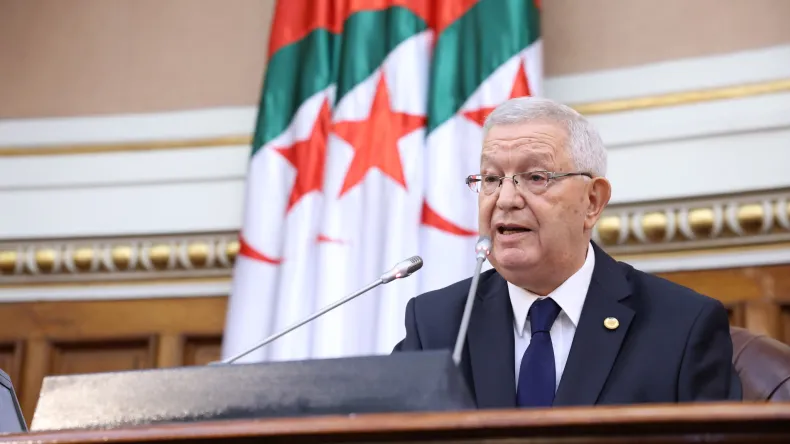
The office of the Council of the Nation issued a formal statement on 10 November 2026 to condemn remarks attributed to a spokesperson for the European Union. Led by Azzouz Nasseri, the council rejected the criticism regarding the deployment of Algerian military units to Niger. The European Union spokesperson had previously addressed these troop movements in comments that sparked the official response from Algerian authorities. On November 10, 2026, the office of the Council of the Nation, led by Azzouz Nasseri, issued a statement condemning remarks made by a person claiming to be a spokesperson for the European Union. The European Union spokesperson's comments concerned the deployment of Algerian military units to Niger. Council members characterized the statements as an interference in sovereign matters. Algeria maintains that its security decisions regarding its borders and neighboring states remain within its national jurisdiction. Azzouz Nasseri and the Council of the Nation emphasized that the military presence in Niger serves specific regional stability objectives defined by the state.
Parliamentary Authorization for Military Deployment
Members of the National People's Assembly and the Council of the Nation invoked Article 91 of the Constitution to approve the deployment of the People's National Army beyond Algerian borders. This legislative action provided the formal mandate for military movements that have drawn scrutiny from European Union representatives. The Algerian Parliament, including the National People's Assembly and the Council of the Nation, activated Article 91 of the Constitution to authorize the deployment of the People's National Army outside the country.
Algerian officials stated that the military units are tasked with protecting energy interests located within Niger. The deployment of military units is intended to protect energy interests and implement a bilateral agreement between Algeria and Niger. The state-sanctioned deployment also functions as a mechanism to implement the specific terms of a bilateral agreement signed between Algeria and Niger. Under the constitutional framework utilized by the parliament, the government maintains that these operations remain consistent with established protocols for the defense of national assets and the fulfillment of international security obligations. By moving to authorize these forces through the National People's Assembly and the Council of the Nation, the state formalised its commitment to the security arrangement with its neighbor. These military units operate under the legal authority granted by the constitutional activation, which remains the basis for the current presence of Algerian personnel on the territory of Niger. The legal basis for this operation relies on the specific constitutional activation authorized by the legislative bodies. Through the formal invocation of Article 91, the National People's Assembly and the Council of the Nation have provided a clear mandate for the People's National Army to operate outside of the national borders of Algeria. This mandate is directly linked to the bilateral agreement signed between Algeria and Niger to ensure the security of shared interests. The state maintains that the protection of energy interests remains a priority for the People's National Army as it fulfills its duties under the current security framework. The council continues to uphold this position in response to external scrutiny regarding the deployment.