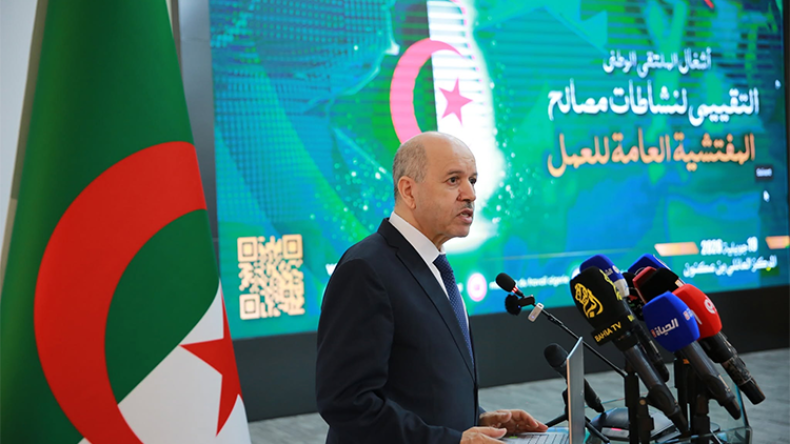
Algeria's Minister of Labor, Employment, and Social Security, Abdelhak Saihi, announced full reforms for the country's labor inspection system, scheduled to begin in September. These significant changes are poised to reshape the operational framework and strategic direction of labor oversight within the nation. The reforms will specifically involve a thorough review of the regulatory framework applicable to regional labor inspectors, ensuring that current legislation adequately supports their key functions. A re-evaluation of their special statute will be undertaken, aiming to clarify and reinforce the legal standing and responsibilities of these essential personnel. Minister Saihi stated that the reforms are fundamentally designed to enshrine the principle of justice and equal opportunities for all workers and employers. He further elaborated that these intended changes are critical to keep pace with the evolving requirements of the current phase of national development and are expected to contribute significantly to improving public service delivery across the labor sector.
Current Inspection Scope and Impact
The existing labor inspection system has already demonstrated considerable activity and impact. According to official data, labor inspectors conducted over 231,000 field visits across various sectors throughout 2025. These extensive inspections encompassed a substantial workforce, covering more than 4 million workers nationwide. Officials have noted a positive trend following these diligent efforts, reporting that the number of violations decreased, indicating an increased level of compliance with labor legislation among economic institutions. This suggests that the current system, even prior to the reforms, has been effective in promoting adherence to labor laws. The Ministry views the labor inspector's role as evolving beyond a purely deterrent function, positioning them instead as a key partner and facilitator for economic institutions. This approach emphasizes collaboration and guidance rather than solely punitive measures. In line with this forward-looking perspective, health and safety at work has been identified as a strategic axis for the labor inspection's ongoing work, reflecting a dedicated focus on employee well-being and protection within the broader reform mandate.
Enhancing Inspector Resources
To bolster the effectiveness of the labor inspection system, the ministry is actively working to enhance the resources available to labor inspectors. This initiative includes a strong focus on digitalization, aiming to modernize operational processes and information management. The implementation of continuous training programs is also a cornerstone of this enhancement strategy. The overarching aim is to equip inspectors with modern tools and updated knowledge, thereby improving their operational efficiency and the overall effectiveness of the labor inspection system. By integrating digital solutions, the ministry seeks to streamline processes, facilitate data management, and enhance the accessibility of critical information for inspectors in the field. The continuous training component is meticulously designed to ensure that inspectors remain proficient with evolving labor laws, regulations, and best practices in occupational health and safety, allowing them to adapt to new challenges and industry standards. These efforts are part of a broader reform agenda announced by Abdelhak Saihi, Minister of Labor, Employment, and Social Security, with the goal of supporting inspectors in their role as partners and facilitators for economic institutions, moving beyond a purely punitive function to one that fosters compliance through guidance and support.
International Cooperation Initiative
In a move to foster greater regional collaboration and share expertise, a specialized training program for labor inspectors from the Republic of Nigeria is scheduled to commence on September 15, 2026. This initiative is designed to strengthen international cooperation in the vital area of labor oversight, according to officials from the Algerian Ministry of Labor, Employment, and Social Security. The program also aims to highlight and leverage Algeria's experience in the field of labor inspection, showcasing its methodologies and successful practices to a wider audience. This effort shows a broader strategy to share best practices and expertise in labor regulation and enforcement, particularly concerning worker protection and compliance. The upcoming training signifies a concrete step towards fostering collaborative relationships between Algeria and other nations on matters related to labor law enforcement and ensuring the protection of workers' rights, further solidifying Algeria's role as a regional leader in labor governance. This program is expected to contribute to the overall enhancement of labor inspection capabilities not only in Algeria but also in partner countries.