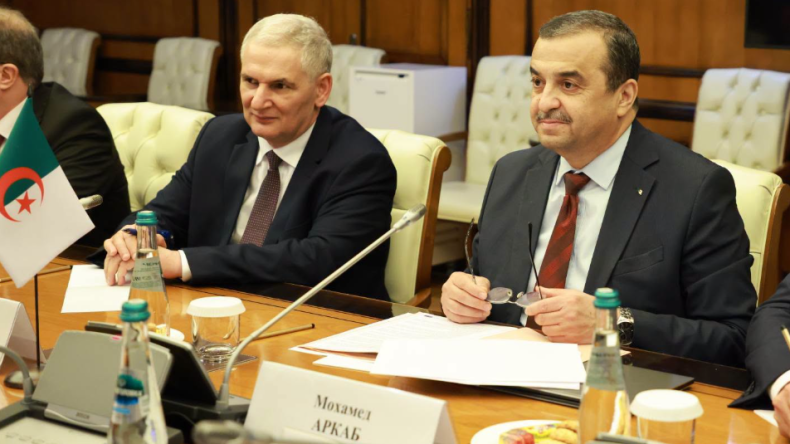
Minister of State, Minister of Hydrocarbons Mohamed Arkab affirmed Algeria's strong commitment to the principles of cooperation and coordination within the "OPEC+" alliance during talks in Moscow on Thursday. Minister Arkab renewed on Thursday in Moscow Algeria's firm commitment to these principles of cooperation and coordination within the "OPEC+" alliance. Arkab stated that Algeria "was and remains an active and influential party in supporting agreements that serve the interests of producers and consumers alike." His remarks showed the nation's ongoing role in the oil production group and its dedication to the collaborative framework. This reaffirmation notes Algeria's consistent policy regarding global oil market management and its strategic partnership within the alliance.
OPEC+ Cooperation Goals
Both sides emphasized the importance of collective and precise adherence to the commitments agreed upon within the framework of "OPEC+". The discussions in Moscow noted a shared view on market stability, recognizing the critical role of unified action. Both sides stressed the importance of collective and precise adherence to the commitments agreed upon within the framework of "OPEC+". This mutual understanding reinforces the alliance's operational discipline, which is vital for achieving its stated objectives.
Algeria and Russia affirmed their support for the ongoing efforts of OPEC and participating non-OPEC countries. These efforts are aimed at enhancing global energy security, ensuring the sustainability of supply, and stabilizing international markets. The two sides affirmed their support for the efforts of OPEC and participating non-OPEC countries in enhancing energy security, ensuring supply sustainability, and stabilizing global markets. This shared commitment extends to fostering a predictable environment for both oil producers and consumers. The commitment from both nations shows a continued focus on collaborative strategies to manage oil production and market dynamics responsibly, reflecting a broader dedication to global economic stability.
Historical Context of OPEC+
Since late 2016, the "OPEC+" group, comprising OPEC member countries and non-OPEC producers such as Russia, has been actively setting production quotas. This initiative aims to manage market volatility and foster stability in global oil markets. Since late 2016, OPEC and non-OPEC producers like Russia have been setting production quotas to control market volatility within the "OPEC+" group. This collaborative framework established within OPEC+ reflects an ongoing effort to balance oil supply and demand, influencing international energy prices and market conditions. These quotas are part of a broader strategy by the participating nations to ensure predictability and sustained revenues for producers, while also addressing the needs of global consumers. The alliance's actions have become a significant factor in the international energy landscape, guiding production levels and market expectations over the past several years, demonstrating its influence on global energy policy.
Algeria's Role and Stance
Algeria maintains its adherence to the common goals established by the "OPEC+" alliance, which are designed to support the stability and balance of global oil markets. Algeria adheres to common goals aimed at maintaining the stability and balance of global oil markets. This commitment was reiterated during the recent talks in Moscow, showing Algeria's consistent position within the group. The North African nation views its participation as key for ensuring predictability in oil supply and demand dynamics worldwide. Its contributions are geared towards fostering an environment where both producers and consumers can benefit from market equilibrium. Algeria's stance aligns with the broader objectives of "OPEC+" to mitigate volatility, ensuring that global energy security remains strong. By collaborating with other member states, Algeria aims to reinforce collective efforts to stabilize international crude prices and manage production levels effectively, reflecting a shared responsibility towards the global energy landscape and its future sustainability.