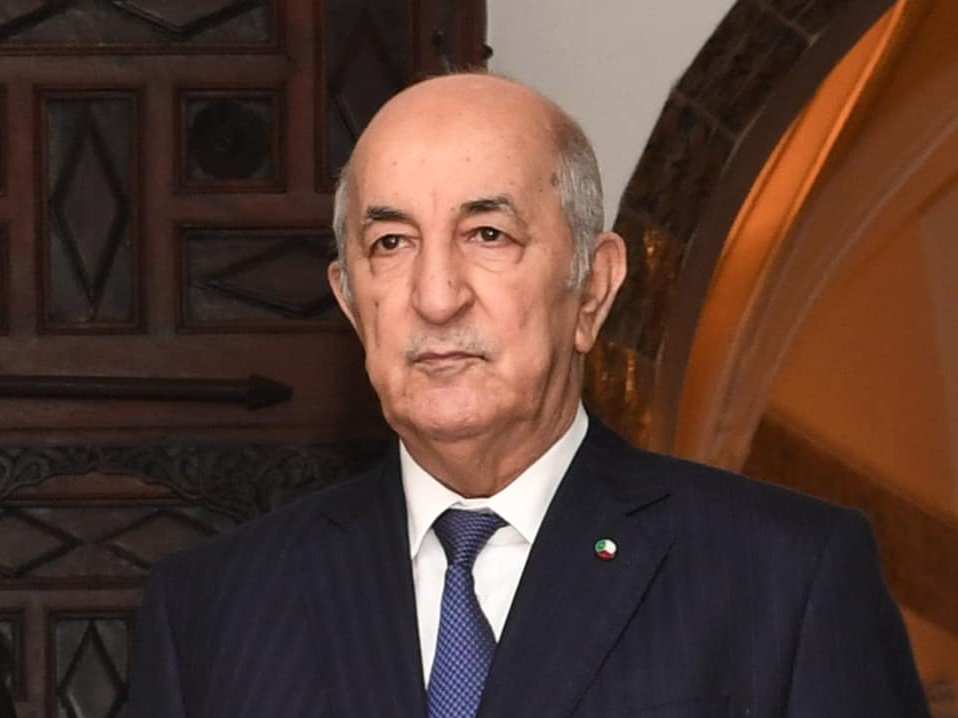
President Abdelmadjid Tebboune addressed the COP17 Leaders' Summit in Yerevan, Armenia, on 16 October 2026, where he outlined Algeria's latest conservation efforts. During the summit, Algeria formally updated and submitted its National Biodiversity Strategy and Action Plan for the 2025–2030 period.
President Abdelmadjid Tebboune explained, "My country aspires, through the revival of the Green Dam over an area of 4.7 million hectares serving as a natural shield against sand encroachment to enhance vegetation and forest cover, and to preserve and restore ecosystems. This is based on an integrated approach combining environmental and social sustainability with economic returns for local populations." He added, "Algeria is fully aware that the credibility of the Kunming-Montreal Global Biodiversity Framework is measured by what we execute on the ground."
National Strategy and Targets
Algeria designed the National Biodiversity Strategy and Action Plan to align with international commitments through specific domestic objectives. Officials structured the document to include 24 national targets aimed at improving ecological health. To achieve these goals, the plan mandates 93 implementation actions across the country. These measures focus on the practical application of conservation policies by government agencies. The framework functions as the primary mechanism for meeting the requirements set by the Kunming-Montreal Global Biodiversity Framework. By defining these targets and actions, Algeria intends to monitor its progress in ecosystem restoration and habitat protection through 2030. These components represent the specific operational path Algeria established to address the loss of natural resources within its borders.
Expanding Protected Natural Zones
Algeria has increased the scale of its conservation efforts by expanding its network of protected areas to include 24 classified zones. These zones encompass a diverse range of environments, specifically covering marine, forest, mountainous, steppe, and desert ecosystems. By designating these areas, the state aims to provide targeted protection for the varied biological habitats found across the national territory.
Scientific documentation of the nation’s biological wealth accompanies these land-use policies. Algeria has cataloged over 27,000 living species to establish a baseline for its ongoing conservation programs. This total includes 8,500 plant species and 18,000 animal species identified within the country. These records serve as a foundational inventory for government agencies responsible for managing biodiversity and monitoring population trends within the newly established zones.
Operational efforts for habitat restoration and land management remain centered on the Green Dam project. This initiative covers an area of 4.7 million hectares, functioning as a primary mechanism for large-scale environmental stabilization. The project is designed to integrate across the varied landscapes mentioned in the national conservation plan, connecting the restoration of forest cover with the broader objectives of protecting steppe and desert ecosystems. By utilizing the 4.7 million hectares of the Green Dam, the government intends to link these localized ecological protections into a cohesive national strategy.