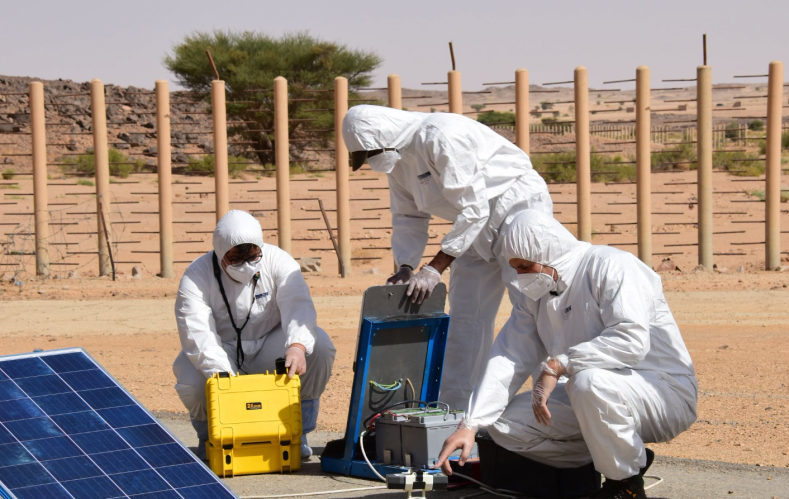
The Algerian Ministry of National Defence launched the second phase of decontamination operations at the Beryl E2 underground nuclear test tunnel on 1 November 2026. Located in the In Ekker area of Tamanrasset, the site is undergoing remediation efforts to address legacy environmental hazards. Officials timed the commencement of these activities to coincide with the 72nd anniversary of the outbreak of Algeria’s Glorious Revolution. The People’s National Army is overseeing the technical procedures as part of the broader national initiative to secure and restore areas affected by historical nuclear testing. This phase follows initial assessments conducted at the location and remains a priority for the ministry as it continues to manage the cleanup of sites across the region.
The Algerian Ministry of National Defence announced the launch of the second phase of decontamination operations at the Beryl E2 underground nuclear test tunnel in the In Ekker area of Tamanrasset on November 1, 2026. This announcement formalizes the mobilization of resources and personnel dedicated to the remediation of the tunnel, which serves as a primary focus for the current environmental restoration program. By scheduling the operation to align with the 72nd anniversary of the outbreak of Algeria’s Glorious Revolution, the ministry emphasizes the national significance of securing territory impacted by historical nuclear testing activities.
Coordinated Decontamination Efforts Underway
Ministry of National Defence personnel manage the decontamination operation in coordination with the National Agency for the Rehabilitation of Former French Nuclear Tests and Explosion Sites in Southern Algeria. Joint teams from these two organizations execute the technical cleanup procedures at the In Ekker site to ensure safety protocols align with national standards for environmental restoration. The decontamination operation is being conducted under the supervision of the Ministry of National Defence in coordination with the National Agency for the Rehabilitation of Former French Nuclear Tests and Explosion Sites in Southern Algeria. This collaborative framework allows for a systematic approach to identifying and neutralizing hazardous materials left behind at the Beryl E2 tunnel.
Algerian officials state that France has evaded criminal responsibility regarding the environmental legacy of nuclear testing in the country. The Ministry of National Defence asserts that French authorities continue to refuse to provide essential records and maps required to identify specific nuclear waste burial sites. Algeria accuses France of evading criminal responsibility and refusing to provide records and maps identifying nuclear waste burial sites in In Ekker and Reggane. These documentation gaps hinder efforts to locate hazardous materials remaining in In Ekker and Reggane. Access to the missing data remains a point of contention between the two nations as Algeria attempts to finalize its remediation activities in the affected areas. The lack of cooperation regarding the mapping of these sites complicates the logistical planning for the ongoing cleanup operations, forcing the People’s National Army to rely on internal assessments to navigate the contaminated zones. As the second phase progresses, the ministry continues to advocate for the release of these records to ensure the full restoration of the In Ekker and Reggane regions.