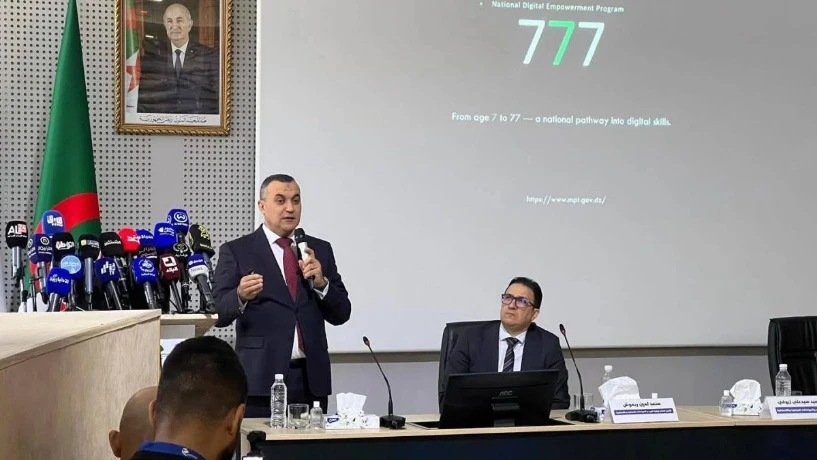
The Ministry of Post and Telecommunications officially launched the "77.7" program on Saturday, May 16, 2026, marking a major national initiative for Algeria's digital future. This program, unveiled on the occasion of World Telecommunications Day, aims to train tens of thousands of Algerians in essential digital skills and strong cybersecurity practices. The National Digital Autonomy Program, as it is formally known, is designed to include participants ranging widely in age, from 7 to 77 years old, directly reflecting the inspiration behind its distinctive name. Its overarching objective is to significantly enhance digital literacy and cybersecurity capabilities across the entire Algerian population, fostering a more secure and digitally empowered citizenry. The launch shows the nation's commitment to advancing its digital infrastructure and human capital.
Program Structure and Content
The "77.7" program is meticulously structured to address diverse demographics, targeting seven distinct age groups with seven specifically tailored courses. This multi-faceted approach ensures that training is age-appropriate and relevant to the participants' existing knowledge levels and future needs. Children aged 7 to 10 will commence their digital education with the "Tech Explorers" course, establishing foundational skills in an engaging and accessible manner. As participants progress through the age groups, the complexity and depth of the digital skills training will increase, covering a wide array of topics key for navigating the modern digital landscape.
Cybersecurity training is integrated as a mandatory and transversal pillar across all seven courses offered by the program. This full approach ensures that participants at every level develop essential protective measures and an understanding of online risks from an early stage. The training curriculum will specifically focus on practical skills such as detecting phishing attempts, effectively combating online scams, deciphering fake news to promote critical thinking, and implementing strong strategies for protecting personal data. This integration aims to build a strong defense against common digital threats among all participants, equipping them with the knowledge and tools to safeguard themselves and their information in an increasingly interconnected world.
National Reach and Capacity
The "77.7" program will utilize seven regional competence centers strategically located across Algeria to facilitate widespread access and ensure equitable distribution of training opportunities. These centers are situated in key cities including Alger, Oran, Annaba, Sétif, Chlef, Saïda, and Adrar, covering various geographical regions of the country. Each of these regional hubs is thoughtfully designed to accommodate and train 1,000 learners annually, contributing significantly to the program's overall capacity. This decentralized model aims to bring digital education closer to communities nationwide.
For the inaugural year, the Ministry of Post and Telecommunications has set an ambitious target to train between 25,000 and 30,000 citizens. This initial phase also includes the organization of 550 to 850 practical workshops, aimed at providing hands-on experience and reinforcing digital and cybersecurity skills nationwide. These workshops will offer immersive learning environments where participants can apply theoretical knowledge to real-world scenarios, further solidifying their understanding and proficiency.
Partnerships and Support
The "77.7" program is backed by a strategic partnership involving the Ministry of Post and Telecommunications, which spearheads this national initiative. Public operators Algérie Télécom and Mobilis are central to this initiative, lending their significant support to its implementation and objectives. This collaboration is designed to enhance the program's reach and effectiveness in training citizens across Algeria, leveraging the strengths of both governmental and corporate entities.
Algérie Télécom, as a national telecommunications provider, brings extensive infrastructure, network capabilities, and technical expertise to the partnership, which are key for delivering high-quality digital education. Mobilis, a prominent mobile operator, contributes its vast experience in digital services, broad consumer engagement, and understanding of mobile technology trends. The combined efforts of these entities aim to ensure the successful delivery of digital skills and cybersecurity training, reinforcing the national drive for digital autonomy. This integrated approach leverages the strengths of government agencies and key public sector companies to achieve the program's ambitious goals of empowering Algerians with essential digital competencies.