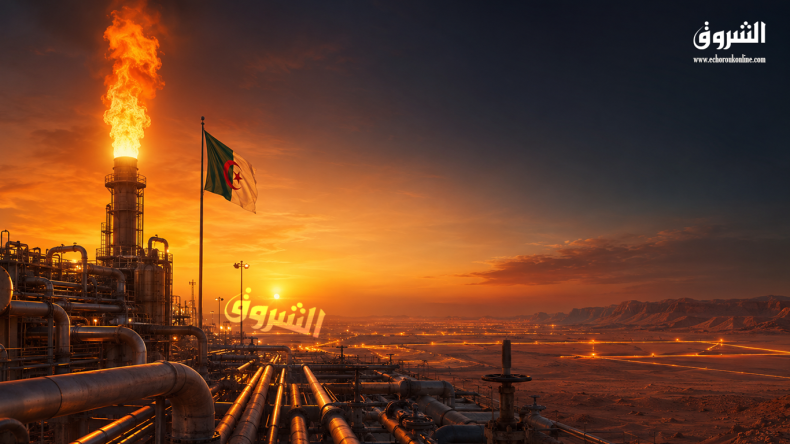
Algeria maintained its position among the top 10 natural gas producing countries globally in 2025, a significant achievement amidst dynamic shifts in the international energy landscape. The North African nation produced 98 billion cubic meters of natural gas that year, showing its continued role as a key player in the global energy market. This production occurred while global natural gas output reached 4.143 trillion cubic meters in 2024, setting the stage for the subsequent year's performance. The global natural gas sector experienced notable changes and growth, with various nations adjusting their production levels.
Algeria's Production Details
Despite the broader global growth, Algeria's natural gas production saw a year-on-year decrease of 1.9% in 2025. This reduction amounted to approximately 2.2 billion cubic meters of production for the North African nation during that year, reflecting specific challenges or strategic adjustments within its energy sector. Despite this decrease in output, Algeria demonstrated resilience by maintaining its position, ranking tenth globally among natural gas producing countries in 2025. This consistent placement notes the country's established infrastructure and strategic importance in natural gas supply chains. The nation's ability to hold its top-tier ranking, even with a slight dip in production, signals its enduring capacity and importance to the global market.
Global Gas Production Landscape
The global natural gas market experienced overall expansion in 2025, with production rising by 1.6% to reach a total of 4.195 trillion cubic meters. This increase indicates a growing demand for natural gas worldwide. The United States led the world in natural gas production for the year, recording an impressive 1.078 trillion cubic meters. This substantial output firmly established the United States at the top of the list of largest natural gas producers in 2025. The country's production saw a significant increase of 4.3% during this period, demonstrating strong growth in its domestic energy sector. In a testament to its expanding capabilities, the United States accounted for approximately 77% of the total global increase in gas production in 2025, playing a dominant role in meeting rising international energy demands.
Russia was the second-largest producer globally, with its output reaching 609.4 billion cubic meters in 2025. However, Russia's production saw a 3% decrease during the same period, indicating a contraction in its gas output compared to the previous year. Iran secured the third position in the global rankings, producing 264.8 billion cubic meters of natural gas. This substantial volume solidified Iran's standing as a major energy producer. China ranked fourth globally, closely behind Iran, with its production volume at 264.1 billion cubic meters. China's output experienced a significant increase of 6.6% in 2025, reflecting its ongoing efforts to boost domestic energy security and meet its growing energy needs.
Other Top Producers Ranked
Further down the list of leading producers, Canada's natural gas production stood at 206.2 billion cubic meters in 2025, positioning it as a significant contributor to global supply. Qatar, another key player in the natural gas market, produced 183.5 billion cubic meters of natural gas during the same year, maintaining its strong presence, particularly in liquefied natural gas (LNG) exports. Australia's production decreased to 148.6 billion cubic meters in 2025, indicating a slight reduction in its output.
Saudi Arabia held the eighth position globally in 2025, with its production reaching 133.8 billion cubic meters. This represented a notable increase of 8.5% for Saudi Arabia in 2025, noting its expanding role beyond oil into the natural gas sector. Norway ranked ninth globally in natural gas production, recording 120.6 billion cubic meters in 2025. Despite its high ranking, the country's production saw a decrease of 2.7% during the same year, reflecting potential shifts in its North Sea operations or market conditions. These figures collectively illustrate a dynamic and evolving global natural gas market, characterized by both growth and adjustments among the major producing nations.