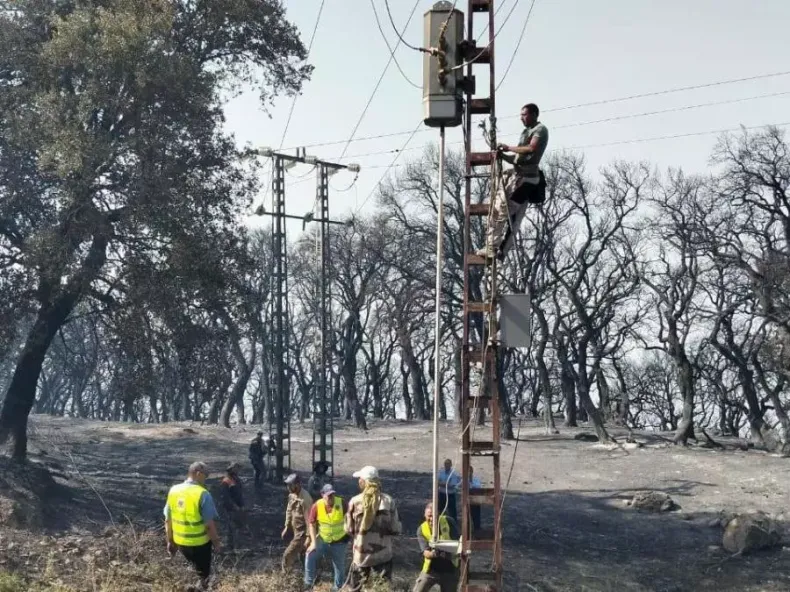
Algeria's President has decided to expedite the activation of the death penalty for individuals proven to be involved in starting forest fires. This measure comes as authorities increasingly view forest fires in Algeria not merely as a seasonal phenomenon, but as a human, environmental, and economic tragedy in certain instances. The decision reflects heightened concerns over the devastating impact of these blazes, which have plagued the nation in recent years. The President's directive specifically aims to accelerate the legal process for implementing capital punishment for those found guilty of initiating these destructive fires.
Legal Framework and International Parallels
The first judge in the country issued an order mandating the amendment of the Penal Code, setting September 15 as the deadline for drafting and amending the criminal law. This legislative push shows the urgency with which Algerian authorities are approaching the issue of arson. Internationally, the United States allows for the death penalty in cases where intentional arson leads to fatalities. This was exemplified in California, where the individual responsible for the Esperanza Fire was convicted of killing five firefighters and subsequently sentenced to death. This case notes how severe penalties, including capital punishment, have been applied in other jurisdictions for arson resulting in loss of life. Other nations, such as Greece, have opted to increase prison sentences and fines for arson offenses without implementing capital punishment, demonstrating a range of legal responses to similar crimes globally. The death penalty itself remains one of the oldest forms of criminal penalties in recorded history, with its application debated across various legal systems.
Lawyers' Perspectives on Deterrence
Legal experts in Algeria have offered varied perspectives on the potential deterrent effect of implementing the death penalty for forest fire arsonists. Lawyer خالد بوجمعة stated that the death penalty is not primarily a deterrent but rather a retributive measure. بوجمعة emphasized that the severity of the punishment, such as capital punishment, does not consistently prevent crimes. He noted that many crimes are committed spontaneously or under the influence, where the perpetrator may not fully consider the legal consequences. He further elaborated that for a penalty to be an effective deterrent, it must be perceived as inevitable and swiftly applied, which is not always the case with capital punishment.
Conversely, lawyer علي فضيل argued that the implementation of such a severe penalty could serve as a strong deterrent. فضيل noted that the public reaction to the fires, particularly the labeling of some acts as "environmental terrorism," indicates a societal demand for stringent measures. He suggested that the finality of the death penalty might instill a greater fear of committing such acts, thereby potentially reducing their occurrence. فضيل stressed that the psychological impact of knowing that one's actions could lead to the ultimate penalty might compel individuals to reconsider before committing arson. Another lawyer, رشيد فضيل, pointed out that while the law exists, its effectiveness as a deterrent depends significantly on the speed and transparency of the judicial process, as well as public awareness of its enforcement. He stressed that swift justice is often seen as a more potent deterrent than the mere existence of a severe penalty. These discussions show the ongoing debate within the legal community regarding the practical impact of capital punishment on criminal behavior in Algeria.
Broader Implications for Justice
The decision to expedite the death penalty for forest fire arsonists in Algeria introduces significant questions regarding its broader implications for the nation's justice system. This move could reshape judicial proceedings related to environmental crimes, potentially influencing how cases are investigated, prosecuted, and ultimately adjudicated. The focus on capital punishment for such offenses may also impact Algeria's international standing concerning human rights and legal practices, drawing scrutiny from global organizations.
The implementation could necessitate a re-evaluation of legal aid and defense mechanisms for those accused, particularly given the irreversible nature of capital punishment. This shift in penal policy could also test the capacity and efficiency of the judicial system, as noted by legal experts like رشيد فضيل, who emphasized the importance of swift and transparent justice for deterrence. The debate among lawyers such as علي فضيل and خالد بوجمعة on deterrence versus retribution further shows the complex legal and ethical considerations now facing Algerian courts. The expedited activation of this penalty signals a firm stance from the Algerian government against environmental crimes, reflecting a national determination to protect its natural resources and public safety.