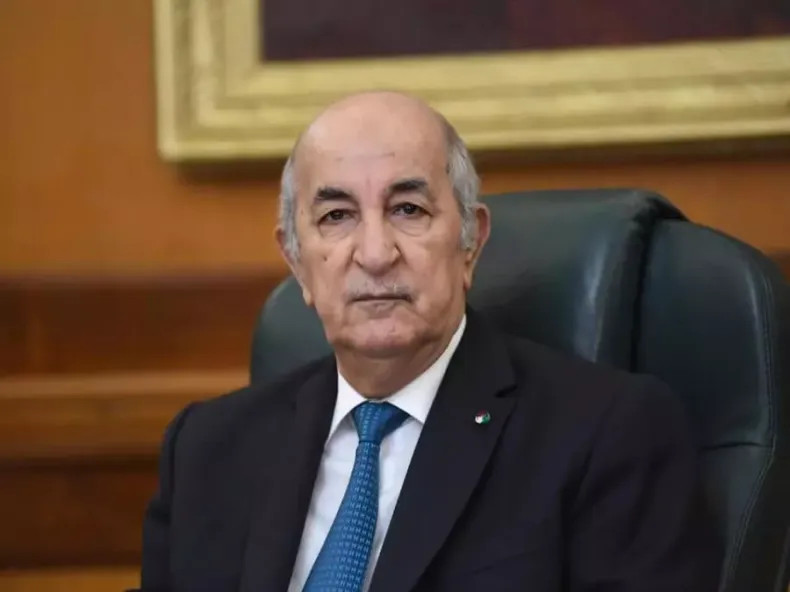
Algerian President Abdelmadjid Tebboune, through Ms. Khalida Boufdeche, Vice President of the People’s National Assembly, reaffirmed Algeria’s firm adherence to the principles and objectives of the Non-Aligned Movement (NAM) during a high-level commemorative meeting in Belgrade, Serbia. The event marked the 60th anniversary of the movement's first founding conference, a significant milestone reflecting decades of international diplomacy and advocacy. President Tebboune, in his address delivered by Ms. Boufdeche, emphasized that "International Circumstances Dictate The Revival Of Non-Aligned Movement Principles," asserting that non-alignment is "not a position of the past nor a fleeting diplomatic dream, but a renewed sovereign choice dictated by the deep transformations the world is witnessing.” He showed that current international circumstances necessitate a revival of these founding principles, which remain highly relevant in navigating complex global challenges. President Tebboune also noted the tragic situation of the Palestinian people, attributing it to continued Israeli aggression, an issue he presented as a stark example of the failures of the current international system. This reaffirmation of Algeria's commitment to NAM's core tenets signals a call for renewed collective action among member states.
Founding Principles and Renewed Relevance
Algerian President Abdelmadjid Tebboune called for strengthening the Non-Aligned Movement's unity and intensifying consultation and coordination among its members. He articulated a clear vision for the movement's future, emphasizing the need for a cohesive and unified approach to global issues. The founding principles of the movement, which include respect for the sovereignty and territorial integrity of states, non-interference in their internal affairs, and the promotion of multilateral cooperation, were central to his message. These principles are gaining renewed importance, according to President Tebboune, due to a concerning return to the use of force as an alternative to diplomatic solutions and a noticeable decline in the effectiveness of the collective security system. He pointed out that this erosion of established international norms makes the NAM's principles more critical than ever. Algeria considers non-alignment a renewed sovereign choice, dictated by deep global transformations that require a principled and unified response from developing nations. The Non-Aligned Movement currently comprises more than 120 countries, representing a significant bloc of nations whose collective voice can profoundly influence the international agenda. This substantial membership shows the potential power and influence the movement holds if it operates as a unified entity.
President Tebboune further elaborated on the current global landscape, suggesting that the challenges faced today, from geopolitical tensions to economic disparities, echo the conditions that initially spurred the formation of the Non-Aligned Movement. He stressed that the original vision of the movement’s founders — to create an independent path free from superpower rivalries — is now more pertinent than ever. The Algerian President's remarks showed the belief that a revitalized NAM can serve as a vital platform for dialogue, cooperation, and the peaceful resolution of conflicts, thereby contributing to a more stable and equitable world order. He reiterated that the principles of non-interference and multilateral cooperation are not merely ideals but practical necessities for fostering genuine international peace and security.
Algeria's Historical Role
President Abdelmadjid Tebboune recalled Algeria's historical role in supporting liberation movements and advocating for just causes, reiterating the country's unwavering commitment to these principles. He showed that "International Circumstances Dictate The Revival Of Non-Aligned Movement Principles," framing this revival as essential for addressing contemporary global inequalities and injustices. Tebboune emphasized that non-alignment is "not a position of the past nor a fleeting diplomatic dream, but a renewed sovereign choice dictated by the deep transformations the world is witnessing." This historical perspective provides a foundational context for Algeria's current advocacy within the movement, noting its consistent dedication to self-determination and sovereign equality.
President Tebboune also noted the initiative by the late President Houari Boumediene during the key 1973 Non-Aligned Movement summit, which Algeria had the honor of hosting. This landmark initiative aimed to establish a new international economic order, reflecting Algeria's long-standing advocacy for global equity and self-determination for all nations. President Boumediene's vision, as recalled by President Tebboune, sought to rectify historical economic imbalances and empower developing countries on the world stage. This historical precedent serves as a powerful reminder of the movement's capacity to drive significant change and challenge established global power structures. The current global landscape, according to Tebboune, necessitates a renewed focus on these historical tenets of non-alignment, particularly in confronting new forms of economic coercion and technological divides. He stressed that the lessons from past struggles for economic justice remain highly relevant in today's interconnected yet often unequal world.
Call for Unity and Action
President Abdelmadjid Tebboune urged countries within the Non-Aligned Movement (NAM) to uphold their foundational principles and operate as a cohesive, unified bloc. He stated, "International Circumstances Dictate The Revival Of Non-Aligned Movement Principles," reinforcing the urgency of collective action. Tebboune emphasized Algeria's conviction regarding the necessity of reinforcing integration, consultation, and interdependence among Non-Aligned Movement countries. He further articulated that non-alignment is "not a position of the past nor a fleeting diplomatic dream, but a renewed sovereign choice dictated by the deep transformations the world is witnessing." This call for enhanced unity and coordinated action reflects Algeria's view that the movement's collective strength is essential in addressing current global challenges, from geopolitical conflicts to climate change and economic instability. President Tebboune reiterated that adhering to these principles and fostering closer ties would enable NAM countries to effectively navigate the evolving international landscape, ensuring their collective interests are represented and respected on the global stage. He called on NAM members to work as a single, unified bloc to amplify their influence and achieve common goals, asserting that such solidarity is the key to maintaining their relevance and effectiveness in the 21st century.