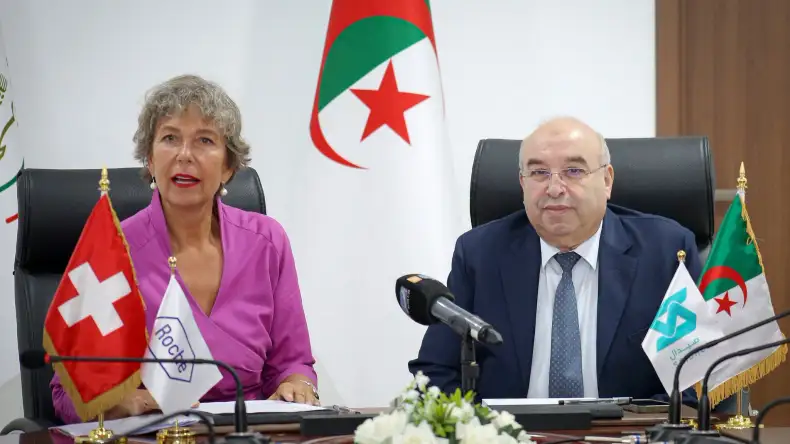
The Ministry of Knowledge Economy, Startups, and Small Enterprises held a coordination meeting with an Italian delegation on Thursday. The discussions focused on developing partnerships in entrepreneurship and the circular economy, specifically within Algeria. During the meeting, an agreement was reached to organize training courses. These courses are intended for project holders and youth, specifically in the fields of circular economy and entrepreneurship, marking a collaborative effort between Algeria and Italy to foster innovation and sustainable development. The overarching goal of these discussions and subsequent initiatives is to support the growth of a strong entrepreneurial ecosystem and promote environmentally sound economic practices in the North African nation.
Exploring Economic Collaboration
Discussions between the Algerian Ministry of Knowledge Economy, Startups, and Small Enterprises and the Italian delegation addressed cooperation in innovation and entrepreneurship, specifically within manufacturing industries. The delegations also discussed leveraging Italian expertise in establishing small enterprises. These enterprises would focus on transforming local raw materials into high value-added resources, aiming to enhance local production capabilities. This strategic approach aims to foster economic diversification and create new opportunities for local businesses. The possibility of connecting these endeavors with the broader European market was mentioned during the talks, suggesting an avenue for wider economic integration and increased market access for Algerian products. This bilateral engagement aims to foster new business models and sustainable industrial practices in Algeria, drawing on Italy's experience in these sectors.
Understanding the Circular Economy
The circular economy operates on principles of recycling and rationalizing consumption. Its primary goal is to reduce the escalating consumption of energy and raw materials, thereby lessening their environmental impact. This economic model actively seeks to minimize waste and maximize resource utilization throughout product lifecycles. The traditional linear economy, in contrast, depends on producing more goods by consuming increased energy and raw materials, which negatively affects natural resources and leads to significant waste generation. This conventional model often follows a "take-make-dispose" approach, which is unsustainable in the long run.
A circular economy seeks to implement less environmentally damaging methods in both manufacturing and remanufacturing processes. This approach significantly reduces resource waste and the overall production of waste, contributing to a more sustainable industrial landscape. For instance, recycling a paper cup into a new paper product helps decrease energy and resource consumption compared to creating a new item from raw materials. This circular path contributes to absorbing a significant amount of waste, offering a dual benefit of the circular economy: resource conservation and waste reduction. The adoption of such practices is key for mitigating environmental degradation and promoting long-term economic resilience.
Future Training Initiatives
The recent coordination meeting between the Algerian Ministry of Knowledge Economy, Startups, and Small Enterprises and an Italian delegation specifically focused on developing entrepreneurship and the circular economy in Algeria. This initiative shows a commitment to fostering innovative business models and sustainable practices within the North African nation. Discussions centered on how Italian expertise could support Algerian efforts to establish new enterprises, particularly those that transform local raw materials into high value-added products. Such ventures are seen as key for enhancing Algeria's domestic production capabilities and potentially linking them to the broader European market. The collaboration aims to implement training courses for project holders and young entrepreneurs, focusing on the principles and applications of the circular economy. These training programs are designed to equip participants with the skills necessary to launch and manage businesses that prioritize resource efficiency and waste reduction, aligning with global trends toward sustainable development and economic growth. The agreement to organize these courses represents a concrete step towards building capacity and promoting a greener economy in Algeria.