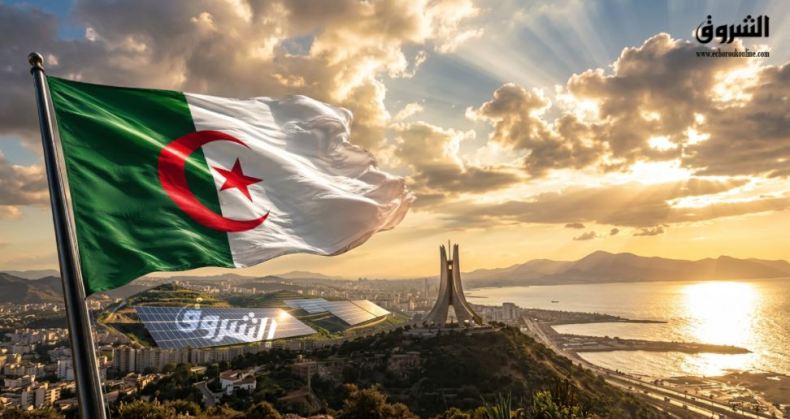
Algeria is significantly expanding its solar and renewable energy infrastructure, targeting an ambitious capacity of 15 gigawatts (GW) by 2035. This push aims to address rising domestic energy demand while simultaneously freeing up natural gas resources for export, particularly to European markets. The North African nation’s strategy seeks to diversify its energy mix and bolster its economic position through cleaner energy production. This substantial investment in solar power represents a key component of Algeria's long-term energy transition plans. The country's renewable energy program focuses on harnessing its abundant solar resources to achieve these strategic goals. The ambitious target of 15 GW by 2035 shows Algeria's commitment to transforming its energy landscape and enhancing its role as a key energy provider.
Renewable Energy Ambitions
The Algerian government has initiated the first phase of its solar expansion, aiming for 3.2 gigawatts (GW) across up to 20 utility-scale projects in 12 provinces. This initial phase involves the development of these projects across various regions, demonstrating a broad national commitment to solar energy integration. Industry analysis indicates significant progress, with the African Solar Industry Association (AFSIA) estimating that Algeria currently has 2.87 GW of solar capacity in the project pipeline. AFSIA further reports that 2.6 GW of solar capacity is actively under construction, noting the tangible steps being taken towards the country's renewable energy goals. Despite these efforts, natural gas remains the dominant energy source, generating approximately 95 terawatt-hours (TWh) annually. In contrast, solar power presently contributes a much smaller 0.87 TWh per year to the national grid, illustrating the significant growth potential for renewable sources. The current reliance on natural gas shows the strategic importance of expanding solar capacity to achieve a more balanced energy mix and reduce carbon emissions.
Strategic Motivations
Algeria's accelerated solar power development is driven by a strategy to address its rapidly growing domestic electricity demand, reduce the nation's carbon emissions, and make larger volumes of natural gas available for export. The expansion is specifically designed to meet this increasing demand while simultaneously contributing to environmental sustainability. The country possesses abundant domestic natural gas production, which is supplied locally at subsidized prices while simultaneously generating substantial revenues from exports. This dual benefit allows Algeria to support its domestic economy and secure significant income from international markets. Ghazi Koubaa, Projects Director at LONGi Middle East & North Africa (LONGi MENA), affirmed that "the country’s primary motivation is to preserve more natural gas for higher-value exports while preparing for potential carbon-related trade measures in European markets." This approach aims to optimize the use of its energy resources, balancing internal needs with external market opportunities and future environmental regulations, particularly in anticipation of evolving global climate policies.
Pathways to Success
Algeria could achieve similar, or even lower, prices for its solar projects by fully embracing the Independent Power Producer (IPP) model and moving away from the traditional Engineering, Procurement and Construction (EPC) approach. State-owned utility Sonelgaz is identifying key grid connection points and advancing plans for an 800-kilometre "electricity highway" designed to link northern and southern Algeria. This ambitious infrastructure project aims to ensure efficient transmission of electricity from new solar farms to population centers. Yacine Boulfrad, Technical Development Director at Scatec, identified five key pillars for success in the country's solar ambitions. Boulfrad stated these pillars include "stable government policies, bankable power purchase agreements (PPAs), competitive tenders, streamlined permitting processes, and strong public-private partnerships." These elements are considered essential for creating an attractive environment for private investment and ensuring the long-term viability of renewable energy projects, fostering a strong and sustainable energy sector.
Expert Perspectives
Boukhalfa Yaïci expects that projects beyond Algeria's initial 3.2 GW solar program will secure direct backing from international financial institutions and development partners. This international support is seen as key for scaling up renewable energy initiatives beyond the initial phase. Mohamed Azir Adim emphasized that localization efforts should transition into a long-term investment strategy. This strategy, according to Adim, focuses on cultivating domestic expertise, bolstering local supply chains, and constructing a competitive renewable energy industry within Algeria. Such an approach would not only reduce reliance on foreign imports but also create jobs and stimulate economic growth within the country. Yacine Boulfrad, Technical Development Director at Scatec, noted that Scatec has contributed to reducing solar electricity tariffs in Tunisia to below US$0.03 per kilowatt-hour. Boulfrad stated, "Scatec has helped reduce solar electricity tariffs in Tunisia to below US$0.03 per kilowatt-hour, adding that Algeria could achieve similar—or even lower—prices by fully embracing the IPP model and moving away from the traditional Engineering, Procurement and Construction (EPC) approach, under which the government finances and owns projects." This suggests that a shift towards private sector involvement could unlock greater efficiency and cost-effectiveness in Algeria's solar energy development.